Thinking in Groove
Designing Bass Lines Through Harmony, Motion, and Time
Welcome
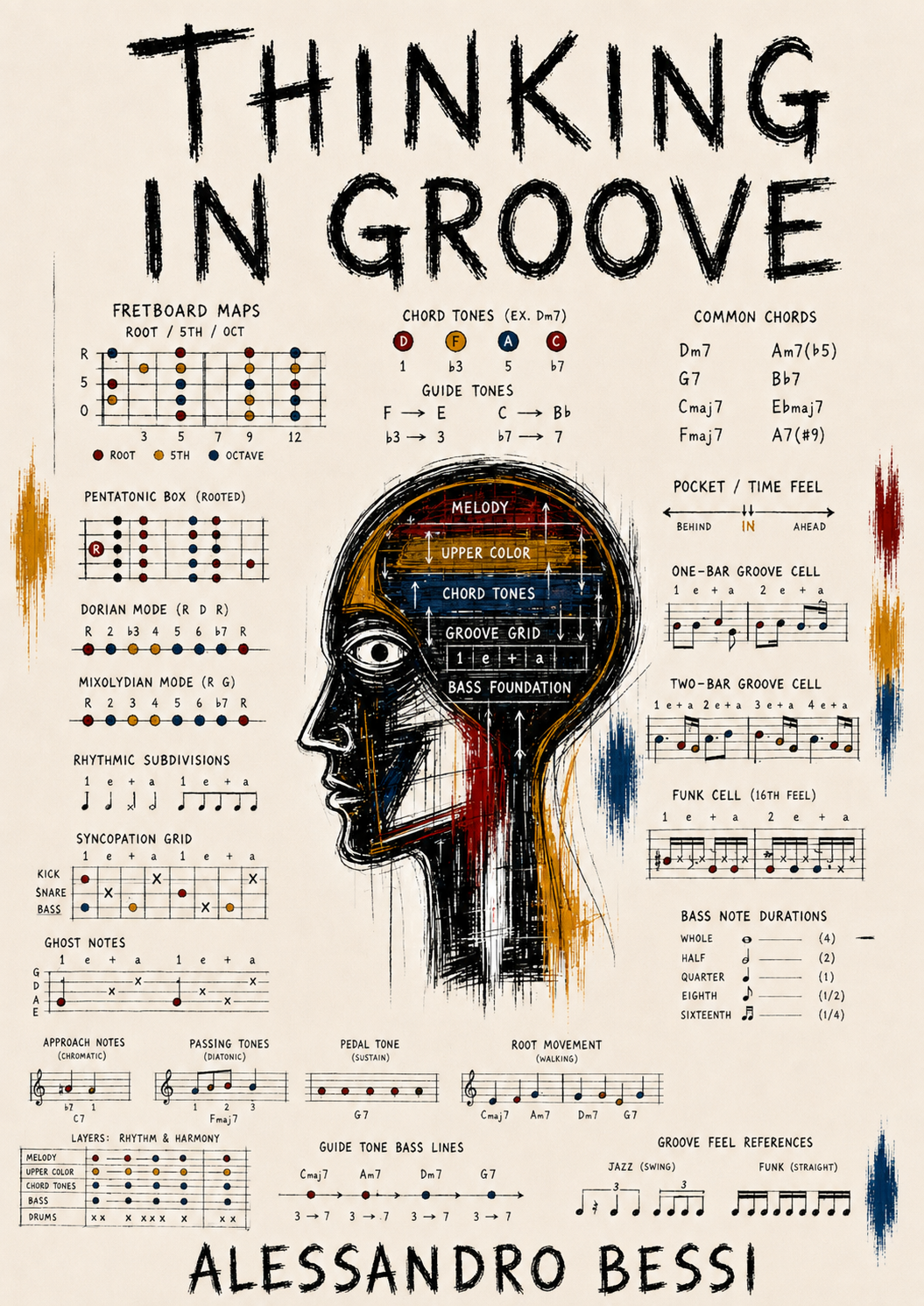
Hear why a bass line works—and design one deliberately.
After reading Thinking in Groove, you will hear low notes as choices about foundation, direction, time, interaction, and design, not as a collection of roots beneath chord symbols.
Role → Motion → Groove → Interaction → Design
The piano is this book’s analytical laboratory, not its technical goal. The left hand represents a realistic, monophonic bass line. The right hand supplies the harmony, pulse, space, and conversation that give the bass meaning. Chord symbols show the map; annotations identify only the decision under study.
The format works for bassists, pianists, composers, arrangers, producers, and any musician who wants a practical model of bass-line construction. A bass player can practise the lower staff alone; two musicians can divide the staves; a producer can treat them as separate MIDI roles.